
What to Know About Used Car Loans Before You Walk into a Dealership
Average used car loan rates hit 11.19% in 2026, but your rate depends on what you know walking in. Learn how dealer financing works and how to get a better deal.

Buying a quality used car is the smart move. Taking care of it is what turns that smart move into a great long-term decision. A well-maintained used vehicle can reliably run well past 150,000 or even 200,000 miles, saving you thousands compared to buying new again. A neglected one can turn into a money pit long before its time.
At the Jersey Shore, proper vehicle care carries some extra weight. Salt air from the coast, salted winter roads, and the stop-and-go demands of summer Shore traffic create conditions that are genuinely harder on vehicles than most parts of the country. The maintenance habits that protect a car in Kansas City or Phoenix matter here, and then some.
Follow these steps and your vehicle will thank you for it. And so will your wallet.
The single most underused resource in any used car is the owner’s manual sitting in the glove box. Every vehicle has specific recommended service intervals (for oil changes, fluid flushes, belt replacements, spark plugs, and more), and those recommendations are not generic. They are engineered for that specific make, model, and engine.
If your used car did not come with a manual, download a PDF version from the manufacturer’s website. Most are available for free. Then set up a simple maintenance log in your phone or a notebook and track every service you perform. That documentation is not just good practice, it adds real value when you eventually sell or trade in the vehicle.
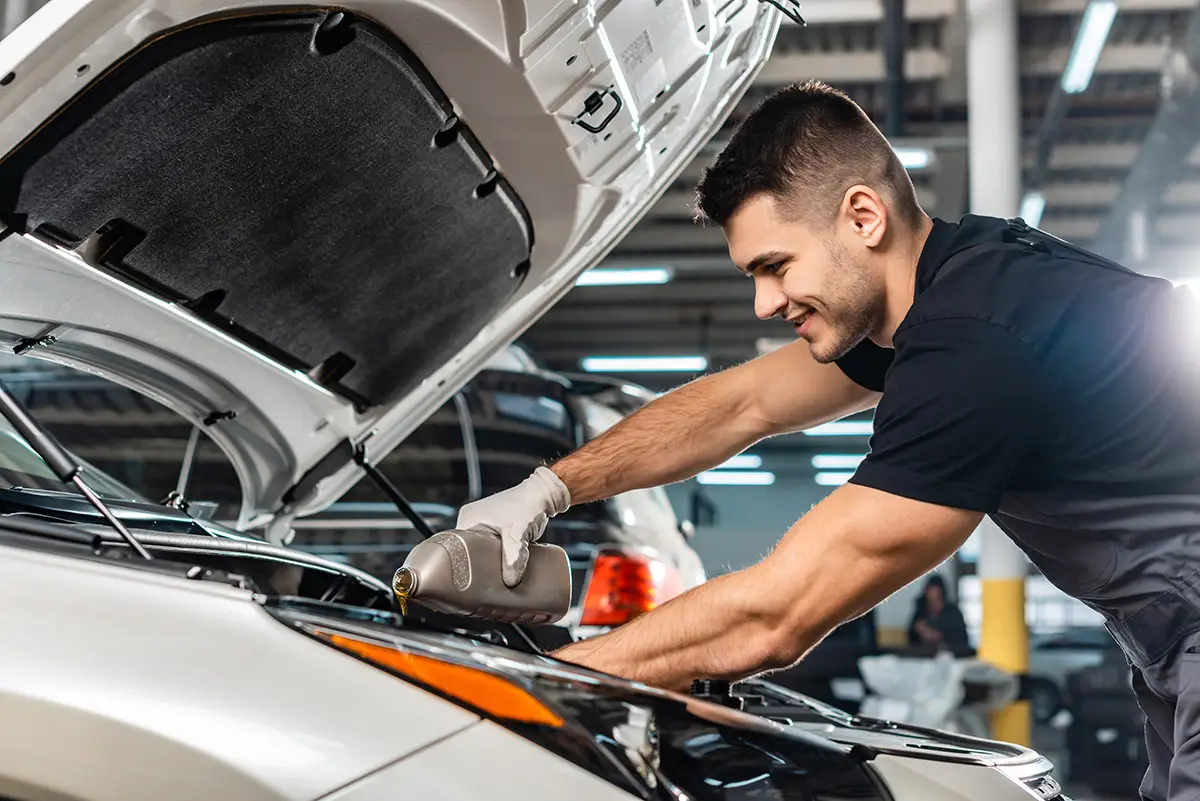
Engine oil is the lifeblood of your vehicle. It lubricates moving parts, reduces friction, prevents overheating, and keeps the engine clean. Old, dirty oil thickens and loses its effectiveness, accelerating wear on components that cost thousands to replace.
Modern vehicles typically call for oil changes every 5,000 to 7,500 miles for conventional oil or every 7,500 to 10,000 miles for full synthetic, but always check your owner’s manual for the specific interval your vehicle requires. If you do a lot of short-trip driving, highway driving in heat, or towing (all common at the Jersey Shore), lean toward the shorter end of that range.
One upgrade worth considering: if your vehicle allows it, switch to full synthetic oil. It performs better at high temperatures, flows better in cold weather, and protects better between change intervals than conventional oil. The extra cost per change is modest and the engine longevity benefit is real.
Tires are the only part of your vehicle touching the road, and their condition affects everything from fuel economy to braking distance to handling. The Jersey Shore’s mix of summer heat, winter cold, and salt-treated roads puts additional stress on tires compared to more temperate climates.
Three things to check monthly:
Brakes are your vehicle’s most critical safety system, and they give you plenty of warning before they fail if you pay attention. Squealing when braking is typically the first sign that brake pads are wearing thin. Grinding means metal is contacting metal, which means the pads are gone and rotor damage may already be occurring. A pulsating or spongy pedal suggests fluid or rotor issues.
Have your brake pads inspected every 10,000 to 15,000 miles, or sooner if you notice any of those warning signs. Jersey Shore driving with its stop-and-go summer traffic and hilly terrain in parts of Monmouth County puts more demand on brakes than highway cruising does. Do not wait until something feels wrong to check them.
A vehicle runs on multiple fluids beyond engine oil, and all of them degrade over time. Here is a practical rundown:
Most car batteries last three to five years. If your battery is approaching that range, have it tested at any auto parts store or service shop. Most will test it for free. A battery that tests weak in September will likely fail on a cold January morning, which is exactly when you need it most.
Also check the battery terminals periodically for corrosion, the white or bluish buildup that can form around the connections. A bit of corrosion is normal, but heavy buildup can prevent the battery from charging or delivering power properly. Clean it with a wire brush and a baking soda and water solution, or ask your mechanic to do it during your next oil change.
Your vehicle has two air filters worth knowing about:
Life at the Jersey Shore puts specific demands on your vehicle that deserve their own section:
All the maintenance tips in this guide are more valuable when someone who knows your vehicle is helping you execute them. A trusted local mechanic in Monmouth or Ocean County (one who knows Jersey Shore road conditions, the vehicles that hold up well in the coastal environment, and the specific history of your car) is one of the most valuable relationships a Jersey Shore vehicle owner can have.
Ask friends and neighbors for recommendations. Read Google reviews. Find someone you trust and bring your vehicle to them consistently. That continuity of care makes a meaningful difference over the life of a vehicle, and a mechanic who knows your car’s history is far better positioned to catch developing issues before they become expensive ones.
Every service you perform on your vehicle is worth documenting. Oil change receipts, tire rotation records, brake service invoices, fluid flush records. Keep them organized in a folder in the glove box or scanned to a folder on your phone. When the time comes to sell or trade in the vehicle, a documented maintenance history is one of the strongest value signals you can present to a dealer or private buyer.
A well-maintained, well-documented used car consistently commands better trade-in offers and private sale prices than an equivalent vehicle without records, because buyers and dealers both understand that documented care reduces the unknowns they are taking on. The records cost nothing to keep and pay real dividends when you are ready to move on.
How do you maintain a used car at the Jersey Shore?
Maintaining a used car at the Jersey Shore requires the same fundamentals as anywhere. Regular oil changes, tire rotations and pressure checks, brake inspections, fluid maintenance, battery care, and air filter replacements, plus some Jersey Shore-specific habits. Washing the undercarriage regularly to remove salt and road treatments is critical for preventing rust and corrosion in the coastal environment. Having a mechanic inspect the undercarriage annually, preparing the vehicle for winter in October before the first storms, and keeping the exterior waxed against salt air and UV exposure all extend vehicle life significantly for Jersey Shore-area drivers.
How often should I change the oil in my used car?
Most modern used vehicles call for oil changes every 5,000 to 7,500 miles for conventional oil or every 7,500 to 10,000 miles for full synthetic, but the correct interval for your specific vehicle is in the owner’s manual. Drivers who do frequent short trips, tow regularly, or drive in high-heat conditions (all common at the Jersey Shore) should change oil at the shorter end of the recommended range. Switching to full synthetic oil, if your vehicle allows it, extends protection between changes and benefits engine longevity.
How do I protect my car from rust at the Jersey Shore?
The best defenses against rust at the Jersey Shore are regular undercarriage washing (especially after winter road treatments and during summer months near the salt air), an annual undercarriage inspection by a trusted local mechanic, a rust inhibitor treatment applied to the undercarriage if early rust is developing, and keeping the exterior waxed to protect the paint and metal from salt air and UV exposure. Catching rust early is far less expensive than repairing structural or brake line damage caused by years of unaddressed corrosion.
Average used car loan rates hit 11.19% in 2026, but your rate depends on what you know walking in. Learn how dealer financing works and how to get a better deal.

Used car prices are currently softening. Let’s break down what that means for Jersey Shore buyers in Monmouth and Ocean County right now.