
10 Questions Every Jersey Shore Used Car Buyer Should Ask
Before you buy a used car at the Jersey Shore, ask these 10 questions to shop smarter and avoid costly surprises.

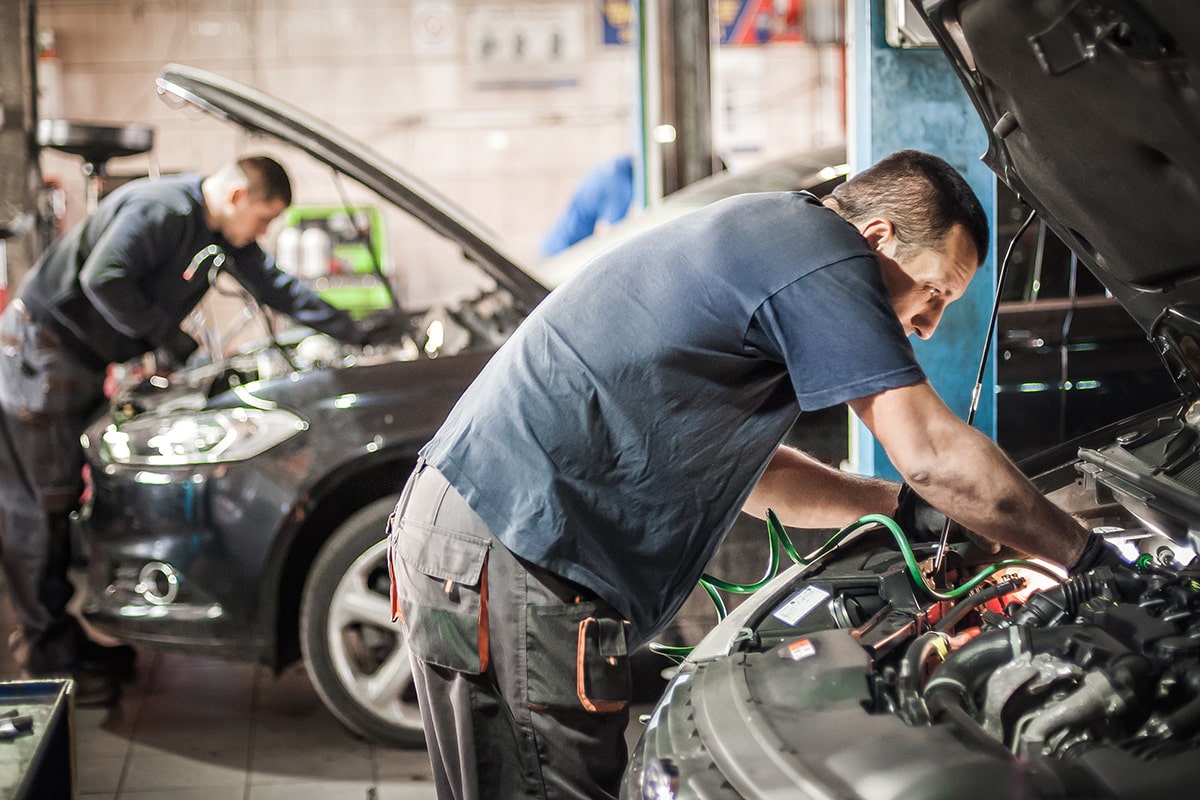
Most of us have been there. The mechanic calls with an estimate that makes your stomach drop, and you find yourself doing the mental math yet again. Is it worth fixing? How much longer will it last? At what point does pouring money into an aging vehicle stop making sense?
It is one of the most common questions we hear at Garden State Car Sales, and it deserves a straight answer. Here are five clear signs that the repair-versus-replace math has tipped, and it is time to start looking for something new.
This is the most clear-cut signal of all. If a mechanic is quoting you a repair that costs more than what the car is actually worth (or even close to it) the math simply does not work in your favor. Putting $2,500 into a car worth $3,000 leaves you with a repaired car that is still worth $3,000, not a car worth $5,500.
A good rule of thumb: if any single repair costs more than 50% of the vehicle’s current market value, start shopping. Use Kelley Blue Book or Edmunds to check what your car is actually worth today, not what you paid for it or what you wish it were worth. That number is the benchmark.
One repair is a repair. Two repairs in six months is a pattern. Three repairs in a year is your car telling you something. When a vehicle reaches a certain age and mileage, systems that have been under stress for years start failing in sequence. First the transmission, then the cooling system, then the suspension. Each fix holds things together temporarily, but the underlying issue is the age and condition of the vehicle overall.
Track what you have spent on repairs over the past 12 months. If that number is approaching what a monthly payment on a reliable used vehicle would cost you, you are effectively paying for a new car without actually getting one.
There is a specific kind of stress that comes with driving a car you do not fully trust. The slight hesitation at the traffic light. The noise that appears on cold mornings. The warning light you have learned to ignore because nothing seems to happen when it is on. If you find yourself planning routes to avoid highways, nervous about long drives, or just generally holding your breath every time you turn the key, that anxiety has a real cost.
At the Jersey Shore, reliability is not optional. Whether you are commuting up Route 9, heading to the beach for the day, or driving the kids to activities, you need a vehicle you can count on. When a car starts to feel like a liability rather than an asset, that feeling is usually right.
Vehicle safety technology has advanced dramatically over the past decade. Backup cameras, blind spot monitoring, automatic emergency braking, lane departure warnings, and forward collision alerts are now standard on most vehicles built after 2018. If your current car was built before that era, it may be missing safety features that protect you, your passengers, and everyone else on the road.
This matters more than people often realize. Modern safety systems have been proven to reduce accidents and severity of injuries. If you have young children in the car regularly, or if you do significant highway driving on the Garden State Parkway or Route 9, upgrading to a vehicle with current safety technology is not just a financial decision. It is a practical one.
Sometimes the decision to move on has nothing to do with mechanical failure. Life changes. Families grow, kids get bigger, jobs change, hobbies evolve. A compact sedan that worked perfectly five years ago might feel impossibly small now that you are hauling beach gear, sports equipment, and a car full of kids every weekend. A gas-guzzling truck that made sense for a previous job might not fit your current commute.
If your current vehicle is creating friction in your daily life (not enough space, wrong body type, poor fuel economy for your driving patterns), that is a legitimate reason to start looking. A well-chosen pre-owned vehicle that actually fits how you live will serve you far better than hanging on to something that just does not work anymore.
Before making the call, do a simple back-of-the-envelope comparison. Add up what you have spent on repairs in the past year, factor in what you expect to spend in the next 12 months based on your mechanic’s assessment, and compare that to what a monthly payment on a quality used vehicle would cost you. In many cases, especially right now when pre-owned vehicles offer exceptional value compared to new, the numbers favor moving on sooner than most people expect.
At Garden State Car Sales in Howell, New Jersey, we work with buyers across Monmouth and Ocean County who are making exactly this transition every day. We will give you a fair, honest assessment of your trade-in, help you find a quality pre-owned vehicle that fits your life and your budget, and make the whole process as straightforward as possible.
No pressure. No games. If the time is right, we will help you find the right vehicle.
How do I know when it is time to stop repairing my car and buy a new one?
The clearest sign is when repair costs approach or exceed 50% of your car’s current market value. Other red flags include repeated visits to the mechanic within a short period, a general feeling of unreliability, outdated or missing safety features, and a vehicle that no longer fits your lifestyle. Tracking your total annual repair spending and comparing it to a monthly payment on a quality used vehicle often makes the decision clear.
Is it better to repair my old car or buy a used one?
It depends on the repair cost relative to the car’s value and how much you have spent on maintenance recently. As a general rule, if a single repair costs more than 50% of what the car is worth (or if you have spent the equivalent of a monthly car payment on repairs over the past year), buying a quality used vehicle is usually the smarter financial move. A reliable pre-owned car also offers better safety features, lower ongoing maintenance costs, and peace of mind.
What should I do with my old car when I am ready to buy a new one?
Trading in your current vehicle is one of the easiest options. Even a car with mechanical issues has trade-in value, and a local dealer like Garden State Car Sales in Howell, NJ, can give you a fair, no-pressure assessment of what your vehicle is worth. That value can be applied directly toward your next purchase, reducing what you need to finance and lowering your monthly payment.
Before you buy a used car at the Jersey Shore, ask these 10 questions to shop smarter and avoid costly surprises.

Looking for the best used car for a senior driver at the Jersey Shore? Let’s review the top comfort, safety, and reliability picks for 2026.